Introduction
Blood volume is a critical factor in maintaining hemodynamic equilibrium and tissue oxygenation. Intravascular volume is regulated very closely by means of several complex mechanisms, for which the onset of action varies widely. In some situations, such as acute bleeding, sepsis or with the use of certain drugs, the body must withstand absolute or relative changes in blood volume that cannot be immediately compensated for by the regulatory mechanisms. In these situations, the main goal of volume therapy is to temporarily increase plasma volume until the body’s own mechanisms can correct the hypovolemia.
Treatment of hypovolemia has changed significantly in recent years. In the past, fresh frozen plasma (FFP) or its equivalent was long the volume expander most commonly used. Now, indications for FFP are limited to the correction of some hemostatic disorders. A by-product of this legitimate change in practice was increased use of human albumin. Because of the financial consequences of this strategy, several consensus conferences have issued recommendations on the best indications for the use of various plasma volume expanders.
Despite these recommendations, the choice of the appropriate agent in the treatment of hypovolemia has not yet been settled. The debate on crystalloids versus colloids continues, besides a debate on the choice of colloid.
Physico-Chemical Properties of Hydroxyethyl starches
Hydroxyethyl starches are modified natural polysaccharides. Solutions of natural starch are unstable and are rapidly hydrolyzed by a-amylase. Hydroxylation or etherification are used to stablize the solution and slow hydrolysis1 , and increase the molecule’s hydrophilia considerably and expand its conformation. The extent of hydroxyethylation may be measured by two features: the degree of substitution and molar substitution ratio. This second characteristic takes into account the di- and tri-substitutions that occur with some molecules of glucose and better reflects the starch’s resistance to hydrolysis by a-amylase. The site of hydoxyethylation on the glucose molecule is preferentially C2, but etherification at C3 or C6 is also possible. Hydroxyethylation at C2 gives the most resistance to a-amylase. The ratio of C2/C6 reflects the types of hydroxyethylation. An important characteristic of these products is also molecular weight in weight (Mw) and molecular weight in number (Mn). However, molecular weight is not the parameter that determines the starch’s pharmacokinetics, which depend mainly on the degree and type of hydroxyethylation. However, molecular weight is a major determinant of the solution’s side effects.
The first hydroxyethyl starch was marketed in Germany and the United States and had a high Mw (450 kD). However, this starch had side effects on hemostasis that led to its being withdrawn from the market. Other starches with a lower molecular weight have now been developed. In France, the main products are Elohes®, Lomol®, Heafusine® and Haes-Steril®. These products have similar although differing characteristics. Elohes® is a 6% solution, has a Mw of 200 kD and a molar substitution rate of 0.62. Lomol® is a 10 % solution, has a Mw of 250 kD and a molar substitution rate of 0.45. Haes-Steril® and Heafusine® have similar although not identical characteristics to Lomol® and are 6% solutions.
Pharmacokinetics of Hydroxyethyl Starches.
 [ Ampliar imagen ] |
| Figura 1 |
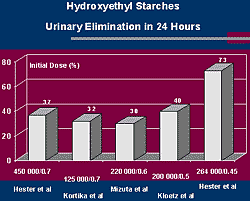
Unlike the dextrans, the pharmacokinetics of hydroxyethyl starches are not influenced mainly by Mw, but depend mainly on the degree of hydroxyethylation2,3 (Figure 1). The main route of elimination of hydroxyethyl starches is urinary. A fraction is taken up by the reticuloendothelial system where the starch is slowly broken down. The rate of uriniary excretion in the 24 h following administration of hydroxyethyl starch depends mainly on the degree of hydroxylation. For Elohes®, the elimination half-life of the medium-size molecules is 7 h and 5 days for the large molecules. For Lomol®, the elimination half-life of the medium-size molecules is 3 h and 2 days for the large molecules. Actually, the usual data are poorly suited to describing the pharmacokinetics of these variably dispersed solutions, since they describe the average kinetics of the solution rather than of its various fractions. It has been shown that after an infusion of hydoxyethyl starch, the dispersion of the Mw molecules changes, first because the smaller molecules are rapidly eliminated and then because the large molecules are partially hydrolyzed to become medium-sized molecules. This partial hydrolysis tends to increase or stabilize plasma volume expansion over time. This phenomenon is reported to predominate for 2 to 4 h following infusion. Intravascular hydrolysis by a-amylase is more limited with some hydroxyethyl starches because of their high degree of hydroxyethylation4 . Tissue distribution of these starch solutions has been studied in an animal model. The reticuloendothelial system, including the spleen, accumulates hydroxyethyl starch for a long time and catabolizes it gradually by means of maltases and the sucrase-isomaltase complex.
Metabolism of hydroxyethyl starches has been studied by monitoring blood glucose and urine glucose, and no change has been seen5. In animals, the molecular weight of molecules excreted in urine is low, but it is much higher than the weight of glucose molecules. In vitro, the addition of hydroxyethyl starch to serum or solution containing amylase does not result in any increase in the glucose level. Together, these data indicate that metabolism of hydroxyethyl starches occurs by means of the production of increasingly smaller molecules down to a weight of about 40,000 to 50,000 D, at which point the molecules are small enough to be excreted in urine, without metabolism continuing to the point of formation of glucose or hydroxyethyl glucose. Based on these data, it may be concluded that hydroxyethyl starch infusions do not change blood glucose levels. However, cases of hyperglycemia and even glycosuria have been reported in non-insulin-dependent diabetics. Of course, volume expanders are used in patients under conditions (shock, surgery) in which other factors that disturb glucose metabolism are already present, such that hydroxyethyl starch is not necessarily responsible for disturbing glucose metabolism.
Given the number of hydroxyethyl starches on the market and the variety of their physical and chemical characteristics, comparison of different products is difficult. A classification by in vitro Mw, i.e. high Mw (450 kD), medium Mw (200 kD) and low Mw (70 kD) does not take into consideration the degree of hydroxyethyl substitution or the C2/C6 ratio. It would make more sense to compare hydroxyethyl starches according to their in vivo Mw after partial hydrolysis of the original solution2. The in vivo Mw depends on the original Mw, the extent of hydroxyethylation and the C2/C6 ratio. The higher the values for all three of these characteristics, the higher the in vivo Mw. This approach would allow for easy comparisons between products since a single feature could be used to differentiate one hydroxyethyl starch from another. Furthermore, in vivo Mw is the key parameter for evaluating colloid osmotic power, pharmacokinetics, accumulation in plasma and tissue and side effects on coagulation and renal function. Colloid osmotic power depends on the number of molecules present, a value that can be determined by dividing the mass concentration by the average in vivo Mw. If we look at two hydroxyethyl starches, one of which has an in vivo Mw that is half that of the other’s, this means that for the same concentration, the solution with the smaller Mw has twice the colloid osmotic power of the other. In other words, for the solution with the smaller Mw, half of the concentration would suffice to produce an equivalent effect6. As well, a lower Mw means that the solution will be cleared more rapidly, and less will accumulate in the plasma and the reticuloendothelial system. Side effects on coagulation and perhaps renal function also depend on the in vivo Mw and plasma concentration. The lower the in vivo Mw, the less starch accumulates in plasma in the event of repeated administration and the fewer the disturbances of coagulation7,8. It would seem that the best hydroxyethyl starch is the one will the lowest in vivo Mw above the threshold of renal eliminiation, which is 50-60 kD. The in vivo Mw of Elohes® is 140-150 kD4,7, higher than that of Haes-Steril®, at 110-120 kD7.
Pharmalogical Properties of Hydroxyethyl Starches
With Elohes®, initial volume expansion greater than the volume infused has been documented by several studies on postoperative volume expansion or normovolemic hemodilution1,4,9. These studies confirm that the effectiveness of this solution equals or surpasses that of human albumin in terms of volume expansion or cardiovascular efficacy4,9. The duration of action is about 24 h. Degrémont et al. ont found that infusion of 500 mL of Elohes® initially expanded volume postoperatively by 693 mL. Volume expansion lasted for 24 hours, although the concentration of Elohes® gradually fell to 35% of peak concentration at 24 hours. In vivo Mw fell within the hour following administration and then remained stable for 24 hours. The albumin concentration initially fell following the Elohes® infusion, and then gradually rose until 24 hours. These findings indicate that although the product’s duration of action is certainly related to its intravascular persistance, other mechanisms are involved and help explain the long duration of action of Elohes®, i.e. intravascular hydrolysis that reduces the in vivo Mw and, even more importantly, mobilization of interstitial albumin and renal adaptations. Comparative studies that measure intravascular volume of other hydroxyethyl starches are not available. As a result, only indirect comparisons may be made. With products such as Lomol® ou Haes-Steril®, volume expansion equal to or greater than the amount infused has been reported10. The duration of action is not as long as that of Elohes®, being about 6 hours. Kolher et al.11 compared a 200/0.5 hydroxyethyl starch in 6% and 10% solutions to a dextran 40 in 10% solution and a polygelatin in 5.5% solution. This study showed volume expansion of at least 6 hours’ duration with this hydroxyethyl starch, longer than that of the gelatin which was eliminated in 3 hours.
The effectiveness of hydroxyethyl starch 200 has been shown in several clinical settings: normovolemic hemodilution, intraoperative blood loss replacement, cardiac surgery, and sepsis12-14 . In intensive care, the concept of impaired capillary permeability has often been used as an argument against colloid use. The reasoning is that colloids do not remain in the intravascular compartment; instead, they increase the interstitial oncotic pressure and promote the development of edema. However, Rackow et al. studied 26 septic patients and found a lower incidence of pulmonary edema in the group treated with hydroxyethyl starch compared to the group treated with crystalloids15. However, these results were obtained with hetastarch which has a particularly high in vivo Mw. Using an experimental model of ischemia and reperfusion, Zikria showed a reduction in the infarct and less myocardial edema in the group treated with hydroxyethyl starch16 . This study was performed using a particular hydroxyethyl starch called pentastarch because the product mainly contains a select category of Mw molecules. Various publications have confirmed the ability of this particular product to reduce edema in experimental models of burns17, ischemia-reperfusion injury16,18-21 or sepsis22,23. Only one published study describes the use of pentastarch in patients with sepsis, but this study compared the product to albumin and did not look at pulmonary edema. Regardless of experimental evidence, it cannot be concluded that pentastarch has demonstrated ability to reduce edema clinically. As well, this product is not yet on the market. Interestingly, however, the experimental studies suggest that the anti-edema properties of pentastarch are not related to the product’s colloid osmotic power, but to other properties that are not yet fully understood. Other research with currently available medium Mw hydroxyethyl starches, not pentastarch, provides evidence for this. For instance, using cultured endothelial cells, Collis et al. showed that hydroxyethyl starch could inhibit endothelial cell activation and limit adverse change in capillary permeability, compared to albumin24. Hydroxyethyl starches might also reduce adherence of leukocytes13 which play an important role in ischemic-reperfusion events. Schmand et al. found that hydroxyethyl starch had no negative effects on cell-mediated immune functions and macrophage function following resuscitation from hemorrhagic shock25. Eastlund et al. found that cytokine release, chemotaxis and monocyte migration were not affected by resuscitation with hydroxyethyl starch following hemorrhagic shock26. A body of experimental evidence thus suggests that hydroxyethyl starches would in fact have a beneficial effect on the inflammatory processes associated with hypovolemic shock. A clinical study conducted on septic patients appeared to support this indirectly by showing better splanchnic oxygenation as measured by the gastric intramucosal pH in patients treated with hydroxyethyl starch, as compared to those treated with albumin14. Overall, the evidence supports the use of hydroxyethyl starches in intensive care patients. Their beneficial effects seem to be more related to their action on inflammatory processes than to their colloid osmotic power. In a risk/benefit analysis of hydroxyethyl starches, however, their side effects should also be weighed.
Side-Effects of Hydroxyethyl starches
The effects of hydroxyethyl starches on hemostasis have been studied by many authors3,27,29 . Hydroxyethyl starches with a high in vivo Mw should be distinguished from other hydroxyethyl starches. Numerous cases of abnormal bleeding have been reported with use of one such product, Hetastarch®2. Lengthened APTT and decreased levels of factor VIII and von Willebrand factor have been documented30-32. These findings and case reports of side effects would justify no longer using this product. Case reports involving Elohes® are more complex since occasional use does not result in hematologic changes even at high doses (33 mL/kg) for 24 h33. Repeated use for 10 days, however, has been associated with clearly abnormal laboratory findings, including reduced levels of factor VIII and von Willebrand factor2. Furthermore, one drug safety monitoring report contains about a dozen cases of bleeding events related to repeated use of Elohes® over several days, most often in a neurosurgical setting. Most of these cases were characterized by hematologic disturbances, particularly reduced levels of von Willebrand factor. Following this report, the marketing authorization and labeling information were amended to indicate that the use of Elohes® should be limited to a maximum of 3 consecutive days.
Treib et al. investigated the effects of various hydroxyethyl starches on hemostasis extensively and showed the influence of in vivo Mw on the type and extent of coagulation disorders. Coagulation abnormalities are seen after repeated administration as part of 10-day hemodilution therapy with products that have a high in vivo Mw compared to initial (in vitro) Mw, high degree of hydroxyethyl substitution or high C2/C6 ratio2,7,34. The typical product in this category is Elohes®. Such products were found to accumulate in the body with a gradual increase in plasma concentrations. Adverse effects on coagulation parameters were proportional to plasma concentration. Shortened thrombin time and decreased fibrinogen levels are probably the result of accelerated polymerization of fibrinogen. Prolonged partial prothrombin time is mainly the result of reduced factor VIII and von Willebrand factor levels. The most likely mechanism for this effect is accelerated clearance of factor VIII-von Willebrand complex after binding by hydroxyethyl starch molecules. Decreased levels of factors XI and XII are seen only with very high in vivo Mw hydroxyethyl starches. These coagulation abnormalities are particularly pronounced after repeated administration of Elohes® over 10 days and are minor or non-existant with products of the Haes-Steril® or Heafusine® type2. In summary, the data show that hydroxyethyl starches with a low in vivo Mw (Haes-Steril® or Heafusine®) have little or no effects on hemostasis, even when given repeatedly for 10 days. The effects of hydroxyethyl starches on kidney function have been discussed in recent publications. Two types of situations should be distinguished: the perioperative setting and the special case of kidney transplantation. The acute hyperoncotic kidney failure syndrom was first reported with dextran use35. This syndrome occurs when colloid osmotic pressure rises to a level where it offsets the hydraulic pressure of glomerular filtration and thereby suppresses urine output. Such a situation occurs when a high plasma level of colloid is reached, generally after repeated administration. Anuria occurs more readily in any situation in which renal perfusion pressure may decrease, such as shock, arteriopathy, or renal artery stenosis36 . This syndrome has now been reported with nearly all colloids: gelatins37 , dextrans35 , starches38 , and concentrated albumin39 . In the case of starches, the development of this syndrome may theoretically be promoted by the repeated administration of a hydroxyethyl starch with a high in vivo Mw leading to a gradual increase in plasma levels. However, these products do not appear to increase the risk of postoperative renal failure even when used in large amounts intraoperatively in thoracic aortic or thoracoabdominal aortic surgery40 or orthopedic surgery41 . In the setting of kidney transplantation, osmotic-nephrosis-like damage has been seen on biopsy of transplanted kidneys when the donor had been resuscitated with hydroxyethyl starch. These lesions appear to be more frequent than in historical series in which donors were not treated with hydroxyethyl starches42 . A prospective, randomized study comparing a gelatin to Elohes® showed poorer recovery of kidney function after transplantation and a greater number of patients requiring hemodialysis in the groups with kidneys exposed to hydroxyethyl starch43 . The mechanism for impaired renal function might be an accumulation of hydroxyethyl starch in the tubular cells. The presence of hydroxyethyl starch in the osmotic-nephrosis-like lesions has not been shown, however, and many other drugs, especially cyclosporin, can produce the same type of damage. Furthermore, another study showed that the incidence of osmotic-nephrosis-like lesions was apparently not influenced by the use of hydroxyethyl starch44 . As well, a multicenter retrospective study did not confirm any adverse effects of hydroxyethyl starch on graft function after kidney transplantation45 .
The immunological tolerance of hydroxyethyl starches appears to be excellent46 . The frequency of allergic reactions is lower than with dextrans and gelatins. Severe reactions are particularly rare.
A New Hydroxyethyl Starch: HES 130/0.4, Voluven®
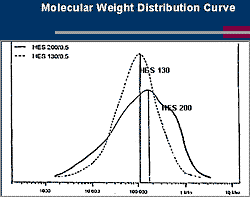
Voluven, HES 130/0.4 is a medium Mw hydroxyethyl starch with the following physico-chemical characteristics: a 130 ± 20 kD in vitro Mw, a 0.4 substitution degree and a C2/C6 ratio greater than 8. The aim of the development of HES 130 was an improvement of the pharmacokinetic and Mw distribution profile of HES 200/0.5, Haes-Steril (Figure 2). This should lead in particular to a decrease of the plasma and tissue storage after repeated administration and probably a lower influence on the coagulation. In order to reach these goals, the Mw distribution curve was narrowed by the reduction of the high molecule fraction, which led to an increase of the medium size fraction, with most of these molecules above the renal threshold. A lower degree of substitution than Haes-Steril® results in an increase in metabolic degradation 47,48 . However, a relatively high C2/C6 ratio lowers partially this effect. Overall, these modifications were expected to increase the metabolic elimination rate of Voluven while the pharmacodynamic effect should be maintained comparable to Haes-Steril®.
 [ Ampliar imagen ] |
| Figura 2 |
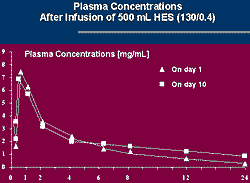
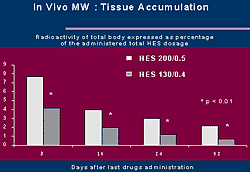
Pharmacokinetics properties have been evaluated with a single dose and repeated adminstration studies. An open, randomised parallel group study 6 was conducted in 24 healthy volunteers to study relevant pharmacokinetic parameters following a single dose of either HES 130/0.4 (6%) or (10%). The analysis of the pharmacokinetic data revealed that elimination from the plasma occurred rapidly (Figure 3). Mean concentrations narrowed the baseline after 24 hours. Alpha and b half-lives were calculated as 0.75 and 12.8 hours for the 6% preparation. The clearance was somewhat more rapid in the 10% group (30.8ml/min) than in the 6% group (25.6ml/min). This difference did not appear to be of clinical significance. HES polymers are hydrolysed by a-amylase in the serum and tissue by cleavage into smaller molecules 10 . The in vivo Mw in both groups were approximately the same, approximately 65 kD. Small HES molecules were eliminated rapidly. The renal threshold was 50 kD. A similar renal threshold was determined for other HES specifications. Within 72 hours 62% of the administered drug was excreted after treatment with HES 130/0.4 (6%) and 68% after treatment with HES 130/0.4 (10%). It must be noted that after 24 hours excretion is minimal. A small amount of HES is possibly stored in tissue. Tissue storage has been evaluated in rats with labelled HES demonstrating a 50 to 75% reduction tissue storage when compared to Haes-Steril® (Figure 4)
 [ Ampliar imagen ] |
 [ Ampliar imagen ] |
| Figura 3 | Figura 4 |
An appropriate study was designed using an open, non-comparative approach with a daily administration of 500ml HES 130/0.4 (10%) to study its pharmacokinetic properties and safety in volunteers. The infusion solution was administered for ten consecutive days. The duration of each infusion was scheduled for 30 minutes. As already known from the single dose experiment, HES was rapidly eliminated from the plasma. The recovery rate in the urine was calculated to be 69% on day 1 and 70% on day 10. Half-lives via pharmacokinetic modeling revealed 1.1 hours and 8.3 hours. Total plasma clearance was calculated to be 23.9ml/min on day 1 and 22.0 ml/min on day 10. The difference was not significant. In conclusion it can be stated that no clinically relevant accumulation of HES 130/0.5 (10%) was found in the plasma. These data are significantly different from those previously reported with other HES7,34
To evaluate the pharmacodynamic properties, an open, non-randomised clinical trial with two consecutive treatment periods was performed in 12 healthy volunteers. The aim of this study was to evaluate the effect of a HES 130/0.4 - 10% and - 6% infusion on blood and plasma volume. In the first instance 500ml HES 130/0.4 (10%) was infused as a top-load hypervolaemically. Secondly, the volunteers underwent a phlebotomy of 500ml blood in order to produce a defined moderate hypovolemia before administration of HES 500 ml 130/0.4 (6%) infusion. The hypervolemic administration of 130/0.4 HES (10 %) showed plasma expansion. The relative blood and plasma volume increased to 20% and 32% (mean and maximum values respectively). The mean maximum increase of plasma volume in relation to the predose volume was 1.13 liters, 0.75 hours after treatment. The volume effect lasted approximately until 6 hours post-infusion. In the second treatment period the induced moderate hypovolemia was replaced isovolemically by the administration of HES 130/0.5 (6%) infusion. The mean maximum increase of the plasma volume compared to predose was 0.70 liters, 30 minutes after treatment. The relative blood and plasma volume increased 7% and 21 % (mean and maximum values respectively). The plasma expansion was comparable to the infused volume, lasted for 6 hours and then returned to baseline levels.
In comparison to other HES specifications HES 130/0.4 is eliminated quite rapidly. The elimination from the plasma initially takes place in 30 to 45 minutes (a-half-life) whereas in the terminal phase the elimination is described with a b half-life of about 12 hours. Therefore, it is assumed that no clinically relevant accumulation will occur under multiple administration. Despite the fast elimination and the low serum HES concentration, the plasma expansion of HES 130/0.4 (6% and 10%) was lasting longer than expected. This can be explained by the higher amount of medium-sized molecules, which cause an increase of the in vivo colloid osmotic pressure. Additionally it is expected that the lower mean molecular weight distribution in serum will have a lower influence on coagulation. A study was designed to evaluate the incidence of hypovolemic episodes in patients having to undergo elective surgeries with potential blood transfusions. Due to this possibility, pre-operative autologous blood donation was requested. Simultaneously to blood withdrawal, the corresponding amount of either HES 130/0.4 or HES 200/0.5 was infused, the latter being considered a standard treatment. This model simulates the treatment of mild protracted blood losses and also corresponds to an acute normovolaemic hemodilution, usually done immediately before surgery as a method for autologous blood saving. Importantly, the estimated blood volumes were comparable for both groups. During the course of the study there was no between-group difference with respect to the primary variable, i.e. the incidence of clinical symptoms of hypovolemia. A clinical study was performed in patients who undergo cardiac surgery. The study focused on the patient's perioperative volume management and, thus, evaluated administration of high doses of HES 130/0.4 (6%). The maximum dose permitted was 3000 ml, which is more than the maximum daily dose currently registered for HES 200/0.5 (6%) in most countries of the EU. If more volume was needed, HAES-steril® 6% was to be continued or a switch made to non-fractionated plasma protein solutions, To control hemostasis, fresh frozen plasma (FFP) was permitted at any time. The primary efficacy variable was the total volume of colloid solution needed for volume management. The administration of colloids was to ensure according to a pre-defined schedule comprising the perioperative phase. The decision to infuse was made upon the investigator's clinical judgement, taking into account hemodynamics and volume balance. The total infused colloid volume was slightly but not significantly higher in the HES 130/0.4 group than in the HES 200/0.5 group (2913ml vs 2884ml). A total of 12 HES 130/0.5 patients received more than 33ml/kg body weight/day or more than 2g/kg body weight/day. The highest dose administered was 42.9ml/kg body weight/day. Regarding fluid balance, the total input was higher in the HES 200/0.5 group than in the HES 130/0.4 group, but output was also higher in the HES 200/0.5 group. Consequently, when calculating the balance, both groups were comparable. The evaluation of hemodynamics showed a similar pattern between the two groups. Results of coagulation parameters indicate no great differences between the treatments, except for more pronounced mean increases in aPTT for HES 200/0.5 in comparison with HES 130/0.4, mean decreases for platelet aggregation for HES 200/0.5, which were not seen with HES 130/0.4, and a larger postoperative increase in the von Willebrand factor for HES 130/0.4. The results support the idea that HES 130/0.4 has a lower influence on hemostasis than HES 200/0.5. In conclusion it can be stated from a clinical point of view that in this setting both test substances appear equally effective for a long treatment period. Another study was also designed as a randomized and double-blind study to compare HES 130/0.4 and HES 200/0.5 as volume replacement therapies in patients undergoing major orthopedic surgery, where blood losses of more than 2000ml were anticipated. In total, 52 patients were included and evenly allocated to the two treatment arms. The results showed in the first place that the study drugs (HES 130 and HES 200) were used equally (1958 vs 1962ml). However, albumin volume was distinctly higher in the HES 200/0.5 group. Also, one patient received commercial HES 200/0.5. Thus, the total administered colloidal volume accounted for 2019ml in the HES 130/0.4 group and 2188ml in the HES 200/0.5 group. As expected, evaluation of plasma HES concentration and molecular weight over 24 hours showed that elimination was faster and in vivo molecular weight was lower for HES 130/0.4 as compared to HES 200/0.5. These data demonstrate that due to its lower in vivo Mw, Voluven® may exert the same plasma volume expansion with lower plasma concentration than Haes-Steril ®.
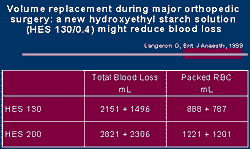
Finally, a multicenter randomized study has been performed in orthopedic surgery. This study included 100 patients with expected blood loss greater than 2000 ml. Patients were randomized to receive either Voluven® or Haes-Steril ®. This study confirmed the equivalence between the 2 drugs in terms of efficacy of volume replacement (1960 vs 1928 mL). Postoperatively, von Willebrand factor was significantly higher in the Voluven® group than in Haes-Steril ® group and aPTT was significantly prolonged in Haes-Steril® group while remaining normal in the Voluven ® group. Interestingly, a trend to lower blood loss in Voluven® group (2151 + 1496 mL) than in Haes-Steril ® group (2821 + 2306 mL) was observed but did not reached the significant level and was associated with lower but non significant transfusion requirements (Figure 5).
 [ Ampliar imagen ] |
| Figura 5 |
In all, this new HES preparation seems to have some determinant advantages when compared to Haes-Steril®. Plasma and tissue accumulation were significantly reduced for the same plasma volume expansion effect. The coagulation is significantly less impaired and a trend for lower blood loss and transfusion requirements is also observed.
Conclusion
Hydroxyethyl starches are the synthetic colloids with the pharmcological properties that are the closest to natural colloids. In addition, there is evidence to support the use of hydroxyethyl starches in intensive care patients. Their beneficial effects appear to be related more to their action on inflammatory processes than to their colloid osmotic power. In a risk/benefit analysis of hydroxyethyl starches, their side effects should also be weighed. Side effects are limited when hydroxyethyl starches with a low in vivo Mw are used. The third generation of hydoxyethyl starch, Voluven, seems to have some determinant advantages when compared to Haes-Steril. Plasma and tissue accumulation were significantly reduced for the same plasma volume expansion effect. The coagulation is significantly less impaired and a trend for lower blood loss and transfusion requirements is also observed.
References
- Baron JF: Pharmacology of low molecular weight hydroxyethyl starch. Ann Fr Anesth Reanim 1992; 11: 509-15
- Treib J, Baron JF, Grauer MT, Strauss RG: An international view of hydroxyethyl starches. Intensive Care Med 1999; 25: 258-68
- Treib J, Baron JF: Hydroxethyl starch: effects on hemostasis. Ann Fr Anesth Reanim 1998; 17: 72-81
- Degrémont AC, Ismaïl M, Arthaud M, Oulare B, Mundler O, Paris M, Baron JF: Mechanisms of postoperative prolonged plasma volume expansion with low molecular weight hydroxethy starch (HES 200/0.62, 6%). Intensive Care Medicine 1995; 21: 577-83
- Hulse JD, Yacobi A: Hetastarch: an overview of the colloid and its metabolism. Drug Intell Clin Pharm 1983; 17: 334-41
- Waitzinger J, Bepperling F, Pabst G, Opitz J, Muller M, Baron JF: Pharmacokinetics and tolerability of a new hydroxyethyl starch (HES) specification [(HES (130/0.4)] after single dose infusion of 6% and 10% solutions in healthy volonteers. Clin. Drug Invest. 1998; 16: 151-160
- Treib J, Haass A, Pindur G, Grauer MT, Wenzel E, Schimrigk K: All medium starches are not the same: influence of the degree of hydroxyethyl substitution of hydroxyethyl starch on plasma volume, hemorrheologic conditions, and coagulation. Transfusion 1996; 36: 450-5
- Treib J, Haass A, Pindur G: Coagulation disorders caused by hydroxyethyl starch. Thrombosis And Haemostasis 1997; 78: 974-83
- Baron JF, De Kegel D, Prost AC, Mundler O, Arthaud M, Basset G, Maistre G, Masson F, Carayon A, Landault C, et a: Low molecular weight hydroxyethyl starch 6% compared to albumin 4% during intentional hemodilution. Intensive Care Med 1991; 17: 141-8
- Mishler JMt: Synthetic plasma volume expanders--their pharmacology, safety and clinical efficacy. Clin Haematol 1984; 13: 75-92
- Kohler H, Zschiedrich H, Clasen R, Linfante A, Gamm H: The effects of 500 ml 10% hydroxyethyl starch 200/0.5 and 10% dextran 40 on blood volume, colloid osmotic pressure and renal function in human volunteers. Anaesthesist 1982; 31: 61-7
- Boldt J, Zickmann B, Rapin J, Hammermann H, Dapper F, Hempelmann G: Influence of volume replacement with different HES-solutions on microcirculatory blood flow in cardiac surgery. Acta Anaesthesiol Scand 1994; 38: 432-8
- Boldt J, Muller M, Heesen M, Neumann K, Hempelmann GG: Influence of different volume therapies and pentoxifylline infusion on circulating soluble adhesion molecules in critically ill patients. Crit Care Med 1996; 24: 385-91
- Boldt J, Heesen M, Müller M, Pabsdorf M, Hempelmann G: The effects of albumin versus hydroxyethyl starch solution on cardiorespiratory and circulatory variables in critically ill patients. Anesth Analg 1996; 83: 254-61
- Rackow EC, Falk JL, Fein IA, Siegel JS, Packman MI, Haupt MT, Kaufman BS, Putnam D: Fluid resuscitation in circulatory shock: a comparison of the cardiorespiratory effects of albumin, hetastarch, and saline solutions in patients with hypovolemic and septic shock. Crit Care Med 1983; 11: 839-50
- Zikria BA, Subbarao C, Oz MC, Popilkis SJ, Sachdev R, Chauhan P, Freeman HP, King TC: Hydroxyethyl starch macromolecules reduce myocardial reperfusion injury. Arch Surg 1990; 125: 930-4
- Zikria BA, King TC, Stanford J, Freeman HP: A biophysical approach to capillary permeability. Surgery 1989; 105: 625-31
- Wisselink W, Patetsios P, Panetta TF, Ramirez JA, Rodino W, Kirwin JD, Zikria BA: Medium molecular weight pentastarch reduces reperfusion injury by decreasing capillary leak in an animal model of spinal cord ischemia. J Vasc Surg 1998; 27: 109-16
- Oz MC, FitzPatrick MF, Zikria BA, Pinsky DJ, Duran WN: Attenuation of microvascular permeability dysfunction in postischemic striated muscle by hydroxyethyl starch. Microvasc Res 1995; 50: 71-9
- Oz MC, Zikria BA, McLeod PF, Popilkis SJ: Hydroxyethyl starch macromolecule and superoxide dismutase effects on myocardial reperfusion injury. Am J Surg 1991; 162: 59-62
- Zikria BA, Subbarao C, Oz MC, Shih ST, McLeod PF, Sachdev R, Freeman HP, Hardy MA: Macromolecules reduce abnormal microvascular permeability in rat limb ischemia-reperfusion injury. Crit Care Med 1989; 17: 1306-9
- Webb AR, Tighe D, Moss RF, al-Saady N, Hynd JW, Bennett ED: Advantages of a narrow-range, medium molecular weight hydroxyethyl starch for volume maintenance in a porcine model of fecal peritonitis. Crit Care Med 1991; 19: 409-16
- Webb AR, Moss RF, Tighe D, Mythen MG, al-Saady N, Joseph AE, Bennett ED: A narrow range, medium molecular weight pentastarch reduces structural organ damage in a hyperdynamic porcine model of sepsis. Intensive Care Med 1992; 18: 348-55
- Collis RE, Collins PW, Gutteridge CN, Kaul A, Newland AC, Williams DM, Webb AR: The effect of hydroxyethyl starch and other plasma volume substitutes on endothelial cell activation; an in vitro study. Intensive Care Medicine 1994; 20: 37-41
- Schmand JF, Ayala A, Morrison MH, Chaudry IH: Effects of hydroxyethyl starch after trauma-hemorrhagic shock: restoration of macrophage integrity and prevention of increased circulating interleukin-6 levels [see comments]. Critical Care Medicine 1995; 23: 806-14
- Eastlund DT, Douglas MS, Choper JZ: Monocyte chemotaxis and chemotactic cytokine release after exposure to hydroxyethyl starch. Transfusion 1992; 32: 855-60
- Egli GA, Zollinger A, Seifert B, Popovic D, Pasch T, Spahn DR: Effect of progressive haemodilution with hydroxyethyl starch, gelatin and albumin on blood coagulation. Br J Anaesth 1997; 78: 684-9
- Jamnicki M, Zollinger A, Seifert B, Popovic D, Pasch T, Spahn DR: Compromised blood coagulation: an in vitro comparison of hydroxyethyl starch 130/0.4 and hydroxyethyl starch 200/0.5 using thrombelastography. Anesth Analg 1998; 87: 989-93
- Boldt J, Knothe C, Zickmann B, Andres P, Dapper F, Hempelmann G: Influence of different intravascular volume therapies on platelet function in patients undergoing cardiopulmonary bypass. Anesth Analg 1993; 76: 1185-90
- Stump DC, Strauss RG, Henriksen RA, Petersen RE, Saunders R: Effects of hydroxyethyl starch on blood coagulation, particularly factor VIII. Transfusion 1985; 25: 349-54
- Strauss RG, Stump DC, Henriksen RA, Saunders R: Effects of hydroxyethyl starch on fibrinogen, fibrin clot formation, and fibrinolysis. Transfusion 1985; 25: 230-4
- Strauss RG, Stump DC, Henriksen RA: Hydroxyethyl starch accentuates von Willebrand's disease. Transfusion 1985; 25: 235-7
- Rosencher N, Vassilieff N, Guigonis V, Toulon P, Conseiller C: Comparison of effects of Elohes and albumin on hemostasis in orthopedic surgery. Ann Fr Anesth Reanim 1992; 11: 526-30
- Treib J, Haass A, Pindur G, Seyfert UT, Treib W, Grauer MT, Jung F, Wenzel E, Schimrigk K: HES 200/0.5 is not HES 200/0.5. Influence of the C2/C6 hydroxyethylation ratio of hydroxyethyl starch (HES) on hemorheology, coagulation and elimination kinetics. Thromb Haemost 1995; 74: 1452-6
- Moran SM, Myers BD: Pathophysiology of protracted acute renal failure in man. J Clin Invest 1985; 76: 1440-8
- Matheson NA, Diomi P: Renal failure after the administration of dextran 40. Surg Gynecol Obstet 1970; 131: 661-8
- Hussain SF, Drew PJ: Acute renal failure after infusion of gelatins. BMJ 1989; 299: 1137-8
- Waldhausen P, Kiesewetter H, Leipnitz G, Scielny J, Jung F, Bambauer R, von Blohn G: Hydroxyethyl starch-induced transient renal failure in preexisting glomerular damage. Acta Med Austriaca 1991; 18: 52-5
- Rozich JD, Paul RV: Acute renalfailure precipitated by elevated colloid osmotic pressure. Am J Med 1989; 87: 359-360
- Godet G, Fleron MH, Vicaut E, Zubicki A, Bertrand M, Riou B, Kieffer E, Coriat P: Risk factors for acute postoperative renal failure in thoracic or thoracoabdominal aortic surgery: a prospective study. Anesth Analg 1997; 85: 1227-32
- Vogt NH, Bothner U, Lerch G, Lindner KH, Georgieff M: Large-dose administration of 6% hydroxyethyl starch 200/0.5 total hip arthroplasty: plasma homeostasis, hemostasis, and renal function compared to use of 5% human albumin. Anesth Analg 1996; 83: 262-8
- Legendre C, Thervet E, Page B, Percheron A, Noel LH, Kreis H: Hydroxyethylstarch and osmotic-nephrosis-like lesions in kidney transplantation. Lancet 1993; 342: 248-9
- Cittanova ML, Leblanc I, Legendre C, Mouquet C, Riou B, Coriat P: Effect of hydroxyethylstarch in brain-dead kidney donors on renal function in kidney-transplant recipients. Lancet 1996; 348: 1620-2
- Coronel B, Mercatello A, Martin X, Lefrancois N: Hydroxyethylstarch and renal function in kidney transplant recipients. Lancet 1997; 349: 884
- Deman A, Peeters P, Sennesael J: Hydroxyethyl starch does not impair immediate renal function in kidney transplant recipients: a retrospective, multicentre analysis. Nephrol Dial Transplant 1999; 14: 1517-20
- Laxenaire MC, Charpentier C, Feldman L: Anaphylactoid reactions to colloid plasma substitutes: incidence, risk factors, mechanisms. A French multicenter prospective study. Ann Fr Anesth Reanim 1994; 13: 301-10
- Ferber HP, Nitsch E, Forster H: Studies on hydroxyethyl starch. Part II: Changes of the molecular weight distribution for hydroxyethyl starch types 450/0.7, 450/0.5, 450/0.3, 300/0.4, 200/0.7, 200/0.5, 200/0.3 and 200/0.1 after infusion in serum and urine of volunteers. Arzneimittelforschung 1985; 35: 615-22
- Lederer K, Huber C, Dunky M, Fink JK, Ferber HP, Nitsch E: Studies on hydroxyethyl starch. Part I: Molecular characterization by size exclusion chromatography coupled with low-angle laser light scattering. rzneimittelforschung 1985; 35: 610-4.